A smart intercom for the building: how a consorcio decides and approves it
Published 7/23/2026
For a building administrator, changing the entry intercom isn’t a technical problem: it’s a consorcio (owners’ association) decision. The hard part isn’t picking the hardware — it’s getting the assembly’s approval, splitting the cost across the owners, and making sure the change doesn’t trigger complaints. This is the guide for making that decision cleanly.
Who decides to change the building’s intercom?
The street intercom is common property: it doesn’t belong to any single unit, it belongs to everyone. So the decision isn’t the administrator’s to make alone, nor any one owner’s — it’s the owners’ assembly (asamblea). The administrator proposes, gathers the quotes, and carries out whatever gets approved; the assembly is what says yes. Skipping that step is the fastest way for a job to end up challenged.
What majority does the assembly need?
Changing the intercom is an improvement or new work on common property, and Argentina’s Civil and Commercial Code treats it differently depending on how much it modifies the building. For an improvement that goes beyond simple repair but doesn’t alter the structure, article 2051 requires an absolute majority of the owners. Unanimity is reserved for works that substantially modify the building’s structure (art. 2052) — something an intercom change normally doesn’t involve.
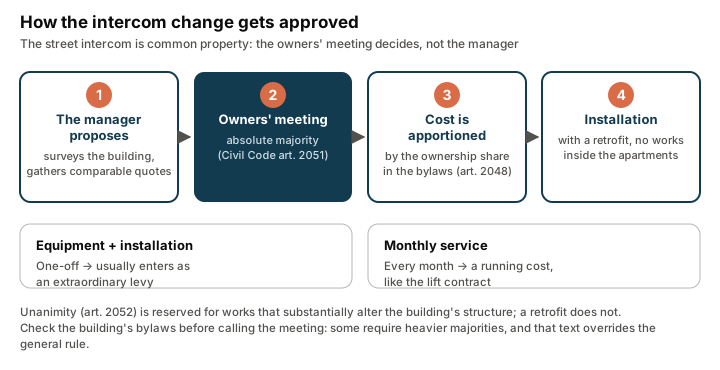
A retrofit — which keeps the existing panel and wiring and only adds the electronics that route the call to a phone — is clearly an improvement that doesn’t touch the structure, so it falls under the majority rule, not unanimity. Even so, before calling the meeting, check the building’s bylaws (reglamento de copropiedad): some require heightened majorities for certain expenses, and that text overrides the general rule.
How is the cost split across the owners?
Everything the consorcio pays is prorated across the units by the percentage each one holds under the bylaws; the intercom is no exception. It helps to separate two numbers that always get mixed up at the assembly:
| What | When it’s paid | Reference (DoorLink) |
|---|---|---|
| Hardware + installation | One time | One-time cost for the building, hardware and labor included |
| Monthly service | Every month | Per apartment, billed to the building |
The hardware and installation usually go through as a one-off special assessment (expensa extraordinaria); the monthly service is just another running cost. The full total in pesos, at the day’s exchange rate, takes a minute in the calculator — so no fixed number gets left behind by inflation. Putting both figures on the table — the one-time outlay and the monthly-per-apartment — heads off the classic assembly argument where someone compares only the hardware price and forgets the subscription.
Why does a retrofit tend to be easier to approve?
Beyond price, there are three reasons an assembly votes a retrofit through faster than a new entry panel:
- It doesn’t change the façade. The same panel stays in place, so it doesn’t open the aesthetic debate or the “touching the front of the building” debate — two things that in a consorcio can stall a vote for months.
- Less work, less disruption. By reusing the existing wiring and panel, the install is short, with nothing to break open or rewire. Less work means less risk of budget surprises and fewer complaints from residents.
- Nobody has to learn anything new. The visitor still presses the same physical button, and the resident answers from their phone. No one has to install a strange app just to be let in. How it works under the hood is in how a smart intercom works; the comparison with QR systems is in physical button vs. QR code.
What to bring to the assembly
To keep the meeting short, an administrator who shows up with these is already halfway there:
- Genuinely comparable quotes. A “hardware only” price isn’t the same as one with installation included — compare total against total. The market snapshot, with dated prices, is in smart intercoms in Argentina.
- The monthly total per apartment. Add up subscription, licenses, and per-unit charges, not just the hardware.
- Impact on the façade and the work involved. Does anything have to be broken open? Does the front change? That answer decides half the vote.
- Who provides support, and how fast. An intercom is building infrastructure: when it fails, someone has to respond quickly and locally.
- Repair or modernize. If the panel still works, the real debate might be retrofit versus replacement — which has its own analysis in replace or modernize the intercom.
The honest fit: a retrofit is at its best when the building wants to keep its panel and avoid construction work — the most common case in buildings that still have a sound entry panel. If the panel is already broken or stolen and has to come out anyway, a QR intercom makes more sense, since it doesn’t depend on preserving anything. Choose by what you want to keep, and bring the total to the assembly, not the brochure.